
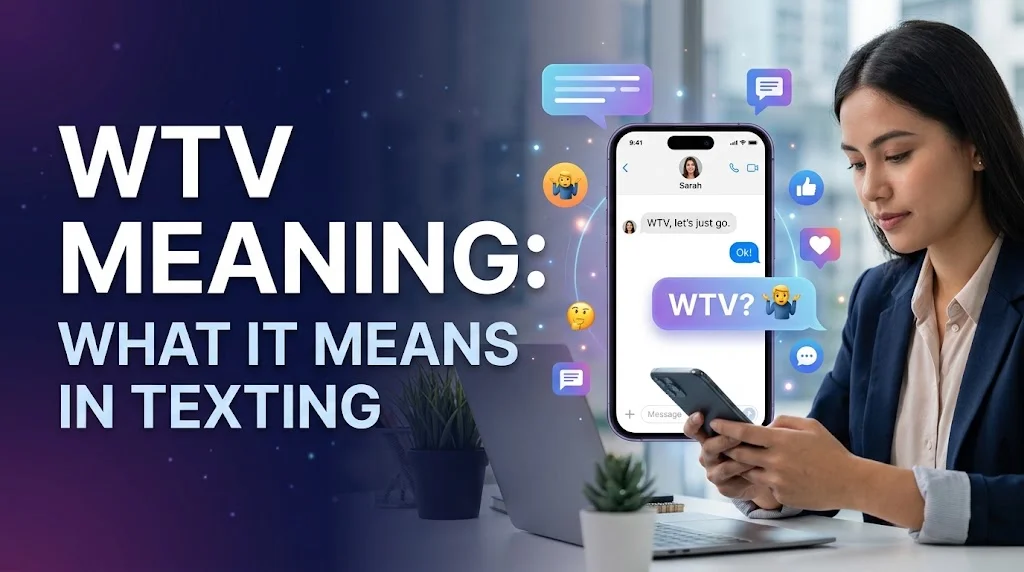
WTV Meaning is simple: it is a common internet abbreviation, shorthand, and texting slang for “whatever” in casual online conversations. When a friend sends WTV in a text message, its meaning, tone, and interpretation can depend on the context and situation. It may sound unconcerned, slightly dismissive, passive, annoyed, mad, lazy, friendly, or not-so-friendly
In text conversations, group chats, social media, Snapchat streaks, Instagram DMs, TikTok comments, and online games, people often use abbreviations because speed matters more than full sentences. For anyone unfamiliar with modern slang, acronyms, internet phrases, and online speech, understanding these terms can prevent misunderstandings and help you respond naturall
The predecessors “whatevs” and the joined-thumbs W shape linked with Clueless show how each generation develops new ways to express laissez-faire indifference. USA TODAY has also published explainers breaking down terms such as ICYMI, mid, and OTP, helping readers learn modern text slang in simple words. Whether you are a student, parent, gamer, or social media user, knowing WTV means in text can make online conversations easier to understand, especially when someone new uses the term.
Quick Answer
WTV meaning in the USA is usually “whatever.” It can express indifference, flexibility, resignation, or mild dismissal, depending on the conversation. More broadly, it reflects the casual shorthand common in digital communication.
TL;DR
- WTV usually stands for “whatever.”
- It’s mainly used in casual American texting.
- Tone can range from relaxed to dismissive.
- Context matters more than the abbreviation itself.
- Lowercase “wtv” often feels especially informal.
- The term is common in chats and social media.
What Does WTV Mean?
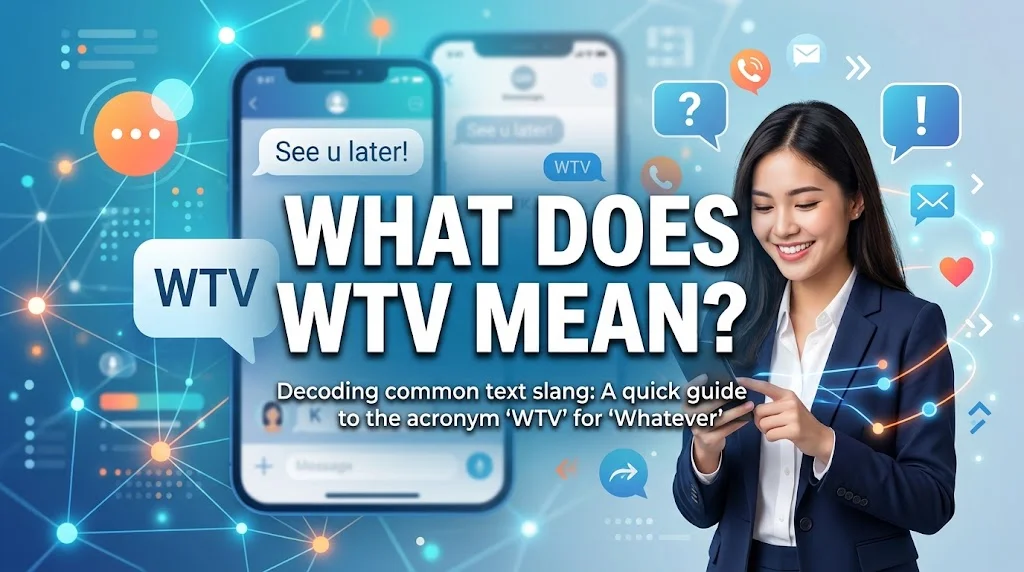
WTV is an informal abbreviation for “whatever.” It removes several letters while keeping the original word easy to recognize.
For American readers, the simplest translation is usually “whatever,” “it doesn’t matter,” or “either choice is fine.”
Common Meanings
The exact meaning changes with the speaker’s intention.
- “Whatever you want” can show flexibility.
- “WTV is fine” can mean either option works.
- “Wtv” alone can signal indifference.
- “Oh, wtv” may communicate annoyance or resignation.
- “WTV lol” can soften an otherwise dismissive response.
Because digital messages lack facial expressions and vocal tone, the same abbreviation can feel very different between people.
WTV Meaning in Texting
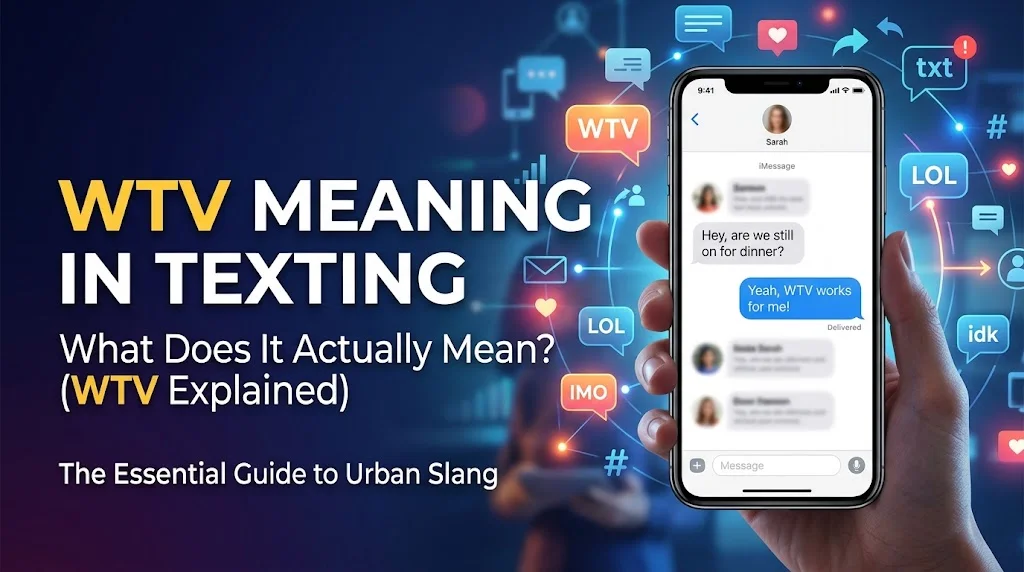
Texting is where WTV is most commonly understood. It works as a quick replacement for “whatever” when the conversation is already casual.
For example, someone might text, “Wtv, pick the movie.” That usually means the person doesn’t have a strong preference.
Examples in Everyday Messages
Consider these examples:
- “WTV works for me.” — Any option is acceptable.
- “Wtv, I’m tired.” — The speaker has stopped caring about the issue.
- “You choose, wtv.” — The speaker is leaving the decision open.
- “Wtv happened already.” — The speaker may be accepting something unpleasant.
- “Wtv 😂” — Humor may make the phrase feel less serious.
The surrounding words are therefore essential. WTV rarely has one fixed emotional meaning.
Is WTV Rude or Dismissive?
WTV isn’t automatically rude. However, it can sound dismissive when used as a short, standalone response.
In American conversation, “whatever” itself has a long history of carrying different tones. It can mean acceptance, indifference, frustration, or even sarcasm.
When It Sounds Casual
“WTV you want is fine with me” usually sounds flexible. The longer sentence provides enough context to show cooperation.
When It Sounds Dismissive
A response such as “wtv” after someone makes an emotional point can feel very different. It may suggest, “I don’t want to discuss this anymore.”
Tone can also depend on punctuation. “WTV!” feels stronger than “wtv lol,” while “wtv…” can suggest frustration or resignation.
History of “Whatever” and Its Short Forms
The word “whatever” is much older than texting. It developed in English as a combination of “what” and “ever,” creating a broad meaning similar to “anything that” or “no matter what.”
For centuries, its primary role was grammatical rather than emotional.
From Grammar to Attitude
Over time, “whatever” gained additional conversational uses. By the late 20th century, English speakers increasingly used it to show indifference.
American popular culture helped strengthen that association. Music, movies, television, and youth speech made “whatever” a recognizable expression of casual disagreement or apathy.
Digital communication then shortened it further.
The Rise of Text Abbreviations
Text messaging encouraged people to communicate with fewer characters. Abbreviations such as “idk,” “omg,” “brb,” and “lol” became familiar parts of online language.
WTV belongs to this broader tradition of informal shortening. Unlike a formal acronym, it works mainly because readers can quickly reconstruct the original word.
Why Do People Use WTV Instead of Whatever?
People use WTV because it is quick, recognizable, and informal. It also fits the conversational style of texting.
Digital communication often rewards speed. Short forms can make a message feel more relaxed and spontaneous.
What WTV Can Communicate
Depending on context, it can signal several attitudes:
- Indifference: “I really don’t care which one.”
- Flexibility: “Either choice is okay.”
- Resignation: “There’s nothing more I can do.”
- Dismissal: “I don’t want to continue this discussion.”
- Casualness: “This isn’t important enough for a serious response.”
These meanings overlap. A single message can carry more than one.
WTV Meaning in American Culture
In the USA, WTV fits a broader cultural preference for conversational, informal language online. Americans commonly use shortened words to make digital communication feel quick and natural.
However, the abbreviation isn’t an official American symbol. It’s better understood as a piece of modern internet and texting language.
Where Americans May See WTV
WTV can appear in many informal settings.
| Context | Likely Meaning in the USA | Common Association | Tone |
| Texting friends | Whatever | Casual conversation | Relaxed |
| Group chats | Any option is fine | Flexibility | Neutral |
| Arguments | I don’t care | Frustration | Dismissive |
| Social media | Whatever | Informal attitude | Casual |
| Gaming chats | Either choice works | Quick decision-making | Practical |
The relationship between speakers matters greatly. Close friends may understand WTV without reading it as rude.
WTV Meaning on Social Media
Social media has helped abbreviations spread across different communities and age groups. WTV may appear in comments, direct messages, captions, and casual replies.
Its meaning usually remains close to “whatever.”
Digital Tone and Context
On social platforms, very short replies can be difficult to interpret. A reader may not know whether the writer is joking, annoyed, bored, or genuinely unconcerned.
That uncertainty explains why WTV sometimes creates misunderstandings.
A person who intends “either option is fine” may accidentally sound like they’re saying “I don’t care about you.”
Emotional and Psychological Associations of WTV
WTV can carry an emotional message beyond its literal meaning. It often communicates a reduced level of emotional investment in the topic.
However, that doesn’t necessarily mean the person truly feels nothing.
Common Emotional Signals
The abbreviation can be associated with:
- Detachment from a minor decision
- Acceptance after a disagreement
- Frustration with repeated discussion
- Humor during casual conversation
- Emotional distance from an argument
- A desire to end an uncomfortable topic
The strongest clue is usually what comes before and after WTV.
For example, “WTV, let’s just go” can suggest resignation. “WTV you prefer!” can instead sound accommodating.
WTV in Friendships and Relationships
WTV can be harmless between people who already understand each other’s communication style. Still, it can become sensitive during emotional conversations.
In relationships, people often interpret very short replies through the emotional context of the moment.
Why Context Matters
Imagine someone asks, “Do you still want to talk about what happened?”
A response of “wtv” may feel like rejection. Yet “WTV you think is best” could simply mean the person is open to the other person’s choice.
The difference comes from the surrounding language, not just the abbreviation.
WTV in Tattoos, Fashion, and Personal Identity
Unlike traditional symbols such as hearts, stars, or religious imagery, WTV isn’t commonly recognized as a universal visual symbol.
Still, short phrases and internet abbreviations sometimes become part of personal style.
Modern Uses
Someone might use WTV in:
- Personalized social media bios
- Casual graphic designs
- Digital usernames
- Text-based memes
- Internet-inspired fashion
- Personal artwork referencing online culture
When used visually, its meaning often depends on the creator’s intended attitude.
It may suggest independence, humor, irony, or simply familiarity with internet language.
Spiritual and Cross-Cultural Perspectives
WTV doesn’t have an established spiritual meaning in major religious traditions. Its primary role is linguistic rather than sacred.
Still, the underlying idea of “whatever” can overlap with broader human themes found across cultures.
Indifference and Acceptance
Many philosophical and spiritual traditions have explored ideas such as acceptance, detachment, uncertainty, and letting go.
Those concepts shouldn’t be treated as direct equivalents of WTV. A casual texting abbreviation usually lacks the deeper religious or philosophical framework surrounding those ideas.
For example, a person saying “whatever happens, happens” may be expressing acceptance. That is different from simply using WTV as a quick text response.
Misunderstandings and Misuse of WTV
The biggest misunderstanding involves assuming WTV always means the speaker is angry or uncaring.
That interpretation is sometimes correct, but it isn’t universal.
Read More: TS Meaning: What It Means in Text, Slang, and TikTok
Reading the Tone Correctly
Consider the full message before interpreting it.
- “WTV you decide” may show flexibility.
- “Wtv, forget it” is more clearly dismissive.
- “WTV lol” may be playful.
- “WTV…” can suggest frustration.
- “WTV works” is usually practical and neutral.
The safest approach is to read WTV alongside the entire conversation.
How the Meaning of WTV Is Changing
Digital slang changes quickly. Some abbreviations become widespread, while others fade as platforms and communication habits change.
WTV remains understandable because “whatever” is already familiar to English speakers.
From Efficiency to Expression
Originally, shortened forms were strongly associated with saving time and space. Today, they also communicate identity and tone.
Choosing “wtv” instead of “whatever” can make a message feel more casual. It may also signal familiarity with online communication.
However, the abbreviation isn’t necessarily tied to one generation. Different age groups can encounter and use digital shorthand in different ways.
WTV vs. Similar Texting Abbreviations
WTV is part of a much larger collection of informal digital expressions. Comparing related forms can make its tone easier to understand.
Similar Expressions
“IDK” means “I don’t know,” while “IDC” usually means “I don’t care.” WTV is different because it can suggest either flexibility or indifference.
“Whatever” can also be written in full when the writer wants greater clarity or emphasis.
That makes the choice between WTV and “whatever” partly a question of tone.
FAQs
What does WTV mean in texting?
WTV usually means “whatever.” In casual American texting, it can express indifference, flexibility, resignation, or dismissal.
Does WTV mean “whatever”?
Yes. “Whatever” is the most common interpretation of WTV in casual online communication.
However, context determines whether it sounds friendly, neutral, sarcastic, or dismissive.
Is WTV slang?
Yes. WTV is informal digital slang or shorthand. It’s most appropriate for casual communication rather than formal writing.
What does WTV mean from a girl or guy?
WTV doesn’t have a special meaning based on whether the sender is a girl or a guy. The sender’s wording and the conversation’s context matter much more.
Is WTV rude in a text?
It can be, but it isn’t always rude. A standalone “wtv” can sound dismissive, while phrases such as “WTV you prefer” can sound flexible.
What’s the difference between WTV and IDC?
WTV usually means “whatever,” while IDC means “I don’t care.” They can overlap, but WTV is often more flexible and context-dependent.
Conclusion
The WTV meaning is usually simple: “whatever.” In American texting and online conversation, though, that short form can express several different attitudes.
It may show flexibility, indifference, resignation, humor, or dismissal. Therefore, the surrounding words and relationship between speakers matter more than the abbreviation alone.
As digital language continues to evolve, short forms like WTV show how people adapt familiar words for fast communication. When you encounter it, read the whole message before deciding what the writer meant.