Have you ever received a message that says “DPWM” and wondered whether the person was joking, annoyed, or being serious? This four-letter abbreviation can be confusing when you don’t know the context. Fortunately, its most common slang meaning is straightforward once you understand the phrase behind it.
DPWM usually stands for “Don’t Play With Me.” People use it in casual conversations to tell someone to stop joking, take them seriously, or stop testing their patience. Depending on the situation, it can sound playful, surprised, frustrated, or firm.
For example, imagine telling your friend that you just won concert tickets. They might reply, “DPWM 😭😂,” meaning they can hardly believe the news and want to know whether you’re serious. However, if someone writes “DPWM. I’m not playing,” the message may carry a much stronger warning.
The surrounding conversation makes all the difference.
In this guide, you’ll learn what DPWM means in text messages, how people use it on WhatsApp, Instagram, TikTok, and Snapchat, and how to respond when someone sends it. You’ll also discover how to distinguish playful teasing from genuine frustration, explore similar texting abbreviations, and avoid common misunderstandings.
What Does DPWM Mean in Text?
In casual texting, DPWM most commonly means “Don’t Play With Me.” It’s an informal abbreviation of a phrase people use when they want someone to take them seriously or stop messing around.
The expression can communicate several related ideas:
- Be serious: The sender doesn’t want you to treat the situation as a joke.
- Stop teasing me: The sender may be tired of playful comments or repeated jokes.
- Don’t test my patience: The sender feels annoyed and wants the behavior to stop.
- Are you serious? The sender may be reacting to surprising or unbelievable news.
- I’m not joking: The sender wants to emphasize that their statement is genuine.
Although the phrase can sound confrontational, it doesn’t always carry an angry tone. Friends often use it dramatically when they’re surprised, excited, or pretending to be offended.
DPWM Meaning in Text: A Quick Definition
| Detail | Explanation |
| Abbreviation | DPWM |
| Common full form | Don’t Play With Me |
| Short meaning | Stop joking, take me seriously, or don’t mess with me |
| Tone | Playful, surprised, annoyed, or serious |
| Typical setting | Informal texts, direct messages, comments, and group chats |
| Formality | Informal; generally unsuitable for professional writing |
Example:
Friend: “I heard you have a crush on Alex.”
You: “DPWM 😂 Who told you that?”
Here, the sender uses DPWM to push back against teasing. The laughing emoji suggests a playful reaction rather than genuine anger.
Now consider a different situation:
Person A: “You promised you’d stop sharing my private messages.”
Person B: “DPWM. I’m serious about this.”
In this exchange, the phrase reinforces a boundary. The sender wants the other person to stop and respect the request.
The abbreviation stays the same, but its emotional weight changes with the situation.
What Does DPWM Stand For?
DPWM uses the first letters of the words in “Don’t Play With Me.” It works as a compact version of the full phrase, allowing someone to express a reaction without typing every word.
Here’s the breakdown:
| Letter | Word |
| D | Don’t |
| P | Play |
| W | With |
| M | Me |
The phrase doesn’t literally refer to playing a game in most texting situations. Instead, “play” means joking around, being dishonest, provoking someone, or refusing to take something seriously.
For example, if someone keeps telling you that your favorite artist canceled a concert as a prank, you might respond, “DPWM, please tell me that’s not true.” You’re asking them to stop misleading you and give you an honest answer.
Likewise, if a friend doubts your ability to complete a difficult task, you might say, “DPWM. I’ve got this.” Your response communicates confidence and tells them not to underestimate you.
What Is the Short Meaning of DPWM?
The simplest interpretation is “Stop messing with me.” However, a few related phrases may capture its meaning more naturally in different situations:
- “I’m serious.”
- “Don’t joke about that.”
- “Stop playing around.”
- “Don’t test me.”
- “Are you for real?”
- “Tell me you’re not joking.”
These expressions aren’t perfect substitutes in every conversation. “I’m serious” emphasizes honesty, while “Don’t test me” sounds more confrontational. “Are you for real?” usually expresses surprise or disbelief.
That’s why understanding the situation matters more than memorizing a single translation.
How Is DPWM Used in Text Messages?
DPWM appears most naturally in informal conversations where people express emotions, react to unexpected information, or challenge someone’s words. Its exact meaning depends on what happened immediately before the abbreviation.
Here are the most common ways someone might use it.
DPWM Meaning When Someone Wants You to Be Serious
Sometimes people joke when a conversation requires an honest answer. DPWM can signal that the sender wants the joking to stop.
Imagine asking your friend whether they’ll attend an important event. Instead of answering directly, they keep making sarcastic comments. You might respond:
“DPWM for a second. I actually need to know.”
In this example, DPWM means something like “Please stop joking around and give me a straight answer.”
People may use it in conversations about plans, promises, relationships, or important decisions. However, the phrase can sound impatient if the other person doesn’t realize the topic matters to you.
If you want to express the same idea more gently, try “Seriously, though” or “Can you give me an honest answer?”
DPWM Meaning When Someone Feels Frustrated
DPWM can also express irritation when someone repeatedly crosses a boundary or refuses to listen.
For example:
Friend: “I’m going to tell everyone your secret.”
You: “DPWM. I trusted you not to share that.”
Here, the sender isn’t simply reacting to a joke. They’re asking the other person to respect their privacy.
The phrase can feel forceful because it implies that the other person is behaving in an unacceptable way. When someone uses DPWM during an argument, don’t automatically assume they’re joking just because the message is short.
Look at the conversation as a whole. If the sender has already explained a concern several times, their message may be a firm request to stop.
DPWM Meaning When Someone Is Surprised or Doesn’t Believe You
One of the lighter uses of DPWM involves disbelief. Someone hears unexpected news and responds as if they need proof that it really happened.
For example:
You: “I met my favorite singer at the airport today!”
Friend: “DPWM 😭 How did that happen?”
The friend probably isn’t angry. They’re expressing amazement and asking for more details.
In this setting, the phrase is similar to “You’re kidding!” or “No way!” It adds emotional emphasis to the reaction.
However, DPWM doesn’t always mean the sender doubts your honesty. They might believe you but still find the situation hard to imagine.
DPWM Meaning When Friends Are Playfully Teasing Each Other
Close friends sometimes use dramatic language for humor. DPWM can become part of that playful back-and-forth, especially when someone makes an exaggerated claim or teases another person.
Consider this exchange:
Friend: “You said you’d only buy one pair of shoes.”
You: “DPWM 😂 These were on sale!”
The response suggests mock outrage. The sender isn’t necessarily warning the friend to stop; they’re playing along with the joke.
Shared humor makes a difference here. Two friends who regularly tease each other may understand the tone immediately. Someone who doesn’t know the sender as well could interpret the same message as hostility.
If you’re unsure whether a joke has landed well, use clearer wording instead of relying entirely on slang.
DPWM Meaning on WhatsApp, Instagram, TikTok, and Snapchat
The basic slang interpretation of DPWM remains “Don’t Play With Me” in casual messaging. However, the situation in which it appears can affect how you understand the sender’s intent.
There isn’t enough reliable evidence to claim that DPWM has a separate standard meaning on each major platform. The following examples illustrate how someone might use it in different online settings.
DPWM Meaning on WhatsApp
WhatsApp conversations often involve direct messages, family groups, friend groups, and everyday planning. In these settings, DPWM may express disbelief, playful frustration, or a request for someone to be honest.
Example:
Friend: “Your favorite restaurant is giving away free meals today.”
You: “DPWM 😂 Send me the details!”
The reply suggests excitement mixed with disbelief. The sender wants confirmation before getting too excited.
In a more serious group chat, the phrase might sound different:
“DPWM. I already explained what happened.”
Here, the sender may feel that someone is questioning their honesty or ignoring an explanation.
How to interpret it: Read the messages before and after DPWM. A joke about free food calls for a different interpretation than a disagreement about a broken promise.
DPWM Meaning on Instagram
On Instagram, DPWM may appear in direct messages, Story replies, comments, or conversations about photos and videos.
For example, suppose you post a picture showing a new haircut. A friend replies:
“DPWM 😭 You actually did it!”
The friend may be surprised that you followed through with a change you’d been discussing for weeks.
In a different exchange, someone might use DPWM to push back against a comment they find disrespectful. The phrase could then carry a firmer tone.
Instagram doesn’t give the abbreviation one official platform-specific definition. The meaning comes from the words, images, relationship, and conversational context surrounding it.
DPWM Meaning on TikTok
TikTok’s short videos and comment threads create plenty of opportunities for exaggerated reactions. Someone might use DPWM after watching an unexpected reveal, hearing a surprising claim, or seeing a creator make a bold statement.
Example:
Comment: “DPWM 😭 I did not expect that ending!”
Here, the commenter expresses surprise. They aren’t necessarily telling the creator to stop doing something.
A user could also write DPWM in response to a claim they find unbelievable:
“DPWM. You’re saying you finished that entire project in one night?”
In this case, the phrase challenges the claim and asks for clarification.
When interpreting DPWM on TikTok, distinguish between a reaction to entertaining content and a direct message aimed at another person. The same abbreviation can perform different conversational roles.
DPWM Meaning on Snapchat
Snapchat messages are often brief and informal, so abbreviations can help people communicate quickly. DPWM may appear in Snaps, direct messages, or ongoing conversations between friends.
For example:
You: “I might actually cut my hair short tomorrow.”
Friend: “DPWM 😭 You’ve been saying that for months!”
The friend sounds amused and surprised. Their response points to a repeated joke or familiar pattern.
Now imagine someone sends DPWM after you repeatedly cancel plans. The phrase may indicate genuine frustration instead.
Practical tip: Snapchat’s disappearing messages don’t make the abbreviation easier to interpret. If the wording feels ambiguous, ask what the sender means rather than assuming their tone.
Read More : MS Meaning in Text: What Does “MS” Mean in Chat, Texting, and Social Media in 2026?
How to Tell Whether DPWM Is Playful or Serious
A short message can carry more than one emotional meaning. Since DPWM lacks facial expressions and vocal tone, you need to consider the clues around it.
No single clue guarantees the sender’s intention. Still, several details can help you make a reasonable interpretation.
Look at the Conversation Before DPWM
The preceding message often provides the clearest clue.
If you just shared exciting news, DPWM may express disbelief or excitement. If you ignored someone’s request or made a hurtful joke, the same abbreviation could communicate frustration.
For example:
- Lighthearted: “I got front-row seats!” → “DPWM 😭”
- Serious: “Please stop making jokes about my family.” → “DPWM. I mean it.”
The first exchange sounds excited. The second reinforces a boundary.
Pay Attention to Emojis and Punctuation
Emojis can suggest tone, but they don’t provide a foolproof translation.
| Message | Possible interpretation |
| “DPWM 😂” | Playful disbelief or teasing |
| “DPWM 😭” | Dramatic surprise, laughter, or disbelief |
| “DPWM 😤” | Frustration or determination |
| “DPWM!!” | Strong emphasis, excitement, or anger |
| “DPWM. I’m serious.” | A firm request to stop joking |
These are possibilities, not fixed rules. People use emojis differently, and some senders rarely use them at all.
A period doesn’t automatically signal anger. Likewise, a laughing emoji doesn’t guarantee that a person feels comfortable with the conversation.
Consider Your Relationship With the Sender
A close friend may use DPWM as a running joke. A coworker or acquaintance may use the same phrase more seriously because you don’t share the same history.
Think about how the person normally communicates. Do they use dramatic expressions when they’re joking? Have they already explained that something bothers them?
Your relationship provides useful context, but it shouldn’t override clear signs that someone wants a behavior to stop.
Ask When the Meaning Isn’t Clear
Sometimes the most accurate response is a simple question.
You could say:
- “Wait, are you joking or serious?”
- “What do you mean by DPWM here?”
- “Did I say something that upset you?”
- “Are you saying you don’t believe me?”
Asking for clarification prevents a small misunderstanding from turning into a bigger argument.
How to Reply When Someone Says DPWM
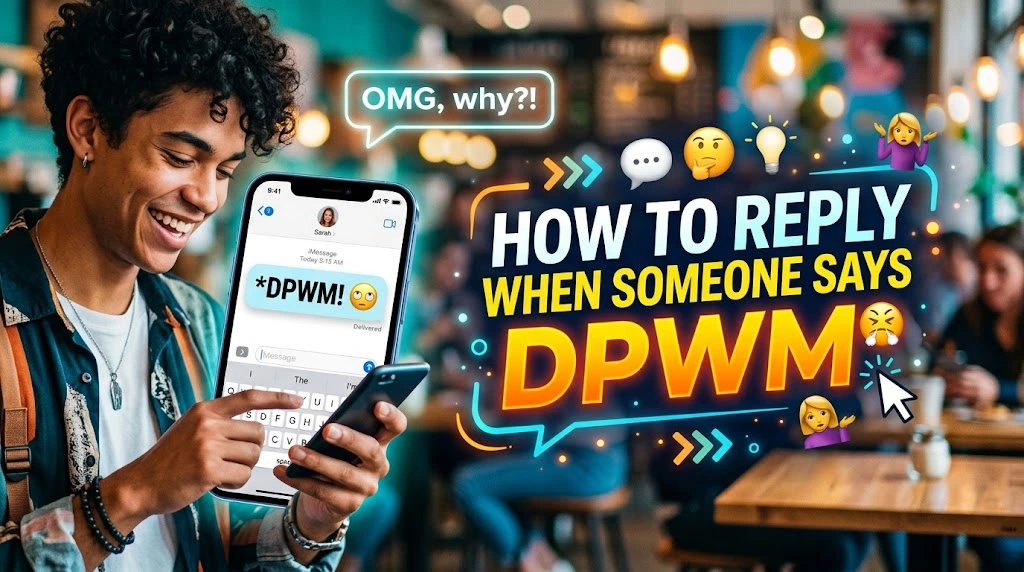
The best reply depends on the sender’s tone and the subject of the conversation. You don’t need to use another abbreviation just to match their style.
A clear, natural response usually works better than trying to guess the perfect slang phrase.
Casual Replies to DPWM
If a friend uses DPWM during an ordinary conversation, keep your reply relaxed.
Examples include:
- “I’m serious!”
- “I’m not playing 😂”
- “I promise it’s true.”
- “No joke, it actually happened.”
- “Believe me this time!”
Example conversation:
Friend: “You really got the job? DPWM!”
You: “I swear! I got the offer this morning.”
This response confirms the news without making the conversation unnecessarily complicated.
Funny Replies to DPWM
When the other person is clearly joking, humor can keep the conversation going.
Try these responses:
- “Who said I was playing? 😂”
- “I’m as serious as a Monday morning.”
- “Cross my heart!”
- “You asked for the truth!”
- “I wish I were making this up 😭”
For example:
Friend: “You ate the whole pizza? DPWM 😂”
You: “Not a single slice survived.”
The playful answer fits because the subject is harmless and both people appear to share the joke.
Avoid funny replies when the sender sounds genuinely upset. Humor can make someone feel ignored if they’re trying to communicate a real concern.
Friendly and Reassuring Replies to DPWM
Sometimes the sender wants reassurance rather than a joke. They may doubt what you said or need confirmation that you’re being honest.
Useful replies include:
- “I’m being honest, promise.”
- “I wouldn’t joke about that.”
- “I understand why you’re surprised.”
- “It’s true. I can explain what happened.”
- “I’m serious, and I want you to understand.”
These responses acknowledge the sender’s concern while keeping the conversation calm.
For instance, if someone doubts an important announcement, a brief explanation may help more than repeating DPWM or sending multiple emojis.
How to Reply When DPWM Sounds Angry
If someone seems frustrated, avoid responding with another challenge. Focus on what they’re asking you to stop doing or clarify.
You might say:
- “I hear you. I’ll stop.”
- “I didn’t mean to upset you.”
- “Sorry, I thought we were joking.”
- “Can you explain what bothered you?”
- “Let’s talk about it so we can clear things up.”
Consider this exchange:
Friend: “DPWM. I’ve asked you not to share that story.”
You: “You’re right. I shouldn’t have shared it. I’m sorry.”
The response recognizes the concern rather than arguing about the abbreviation itself.
If the sender’s message is unclear, ask a question before apologizing for something you don’t understand. The goal is to resolve the misunderstanding, not to assume guilt automatically.
Can You Reply to DPWM Professionally?
DPWM is informal slang, so it generally doesn’t belong in emails, formal workplace chats, or messages to clients. If a colleague uses it, you can answer the underlying message without copying their wording.
For example:
Colleague: “DPWM, the deadline really is today.”
Professional reply: “Understood. I’ll prioritize the remaining work and send you an update.”
This response acknowledges the urgency without adding unnecessary tension.
In professional settings, phrases such as “Understood,” “I’m taking this seriously,” and “I’ll confirm the details” usually communicate the intended message more clearly.
FAQs
1. What does DPWM mean in text?
DPWM is an abbreviation whose meaning may depend on the conversation. It doesn’t have one universally established definition, so context matters.
2. What is the DPWM full form?
There isn’t one widely verified full form of DPWM. Check the surrounding message or ask the sender to clarify.
3. What does DPWM mean on WhatsApp?
On WhatsApp, DPWM may be used in a private chat or group conversation. Its intended meaning depends on how the sender uses it.
4. Does DPWM mean the same thing on Instagram and TikTok?
Not necessarily. Social media communities sometimes use abbreviations differently, so the meaning may vary by context.
5. What does DPWM mean on Snapchat?
If someone sends DPWM in a Snapchat message, consider the conversation before interpreting it. You can ask what they mean if it’s unclear.
6. Is DPWM a popular texting abbreviation?
DPWM is less widely established than common abbreviations such as LOL, BRB, and BTW. Its usage may be limited to certain groups or online communities.
7. How should I reply when someone texts DPWM?
If you don’t understand the abbreviation, reply with something simple like, “What does DPWM mean?” or “Can you explain that?” This avoids unnecessary confusion.
8. Can DPWM have different meanings?
Yes. Abbreviations can have different interpretations in different communities. The safest approach is to use the surrounding conversation to understand the sender’s intention.
Conclusion
Understanding DPWM meaning in text starts with context. The abbreviation doesn’t have one universally recognized definition, so it’s important to consider the surrounding conversation, the sender’s tone, and the platform where you found it.
Whether you see DPWM on WhatsApp, Instagram, TikTok, or Snapchat, avoid assuming its meaning based on the letters alone. If the message seems confusing, asking the sender what they mean is often the easiest solution.
As online slang continues to evolve, new abbreviations can appear and develop different meanings within specific communities. Paying attention to how people use them can help you understand digital conversations more confidently. When in doubt, a quick question is better than a mistaken interpretation.