Sometimes, “proud of you ❤️” says exactly what you feel. It’s short, warm, and personal. But there are moments when you want something more specific.
Maybe your friend finally finished a difficult degree. Perhaps your partner reached a goal after months of hard work. Your coworker might have handled a stressful project brilliantly. Or someone you love simply kept going when giving up would have been easier.
In each situation, “I’m proud of you” works. Still, the right words can make your message feel far more genuine.
The best alternatives don’t simply replace one phrase with another. They explain why you’re proud. Some focus on effort. Others celebrate achievement, personal growth, courage, persistence, or progress.
Below, you’ll find more than 20 other ways to say “proud of you ❤️”, along with examples and guidance on when each expression sounds natural.
What Does “Proud of You ❤️” Mean?
The phrase “proud of you ❤️” communicates admiration, affection, encouragement, or approval toward another person.
When you tell someone you’re proud of them, you’re usually recognizing something they’ve done or the person they’ve become.
For example:
“You worked for this for months. I’m so proud of you ❤️.”
Here, the speaker isn’t merely congratulating the person. They’re acknowledging the effort behind the achievement.
The heart emoji adds another layer. It can make the message feel affectionate, caring, intimate, or emotionally supportive.
However, context matters.
A parent might text their child:
“You worked so hard. Proud of you ❤️.”
A close friend could say:
“You finally did it! So proud of you ❤️.”
A romantic partner might write:
“Watching you accomplish this has been amazing. I’m so proud of you ❤️.”
The basic message remains the same, but the emotional relationship changes how it sounds.
The Meaning Behind “Proud of You”
“Proud of you” generally means:
- I admire what you’ve accomplished.
- I recognize how hard you’ve worked.
- I’m happy about your progress.
- I respect the effort you’ve made.
- Your achievement means something to me.
- I want you to recognize your own success.
The phrase can celebrate either an outcome or a journey.
That distinction matters.
Someone doesn’t have to win a competition, receive a promotion, or achieve a major milestone to deserve this kind of encouragement.
Sometimes the most meaningful version is:
“You didn’t give up when things got difficult. I’m proud of you.”
That sentence recognizes character rather than simply rewarding a result.
Is “Proud of You ❤️” Grammatically Correct?
Yes. “Proud of you” is a natural shortened expression commonly used in informal communication.
The complete sentence is:
“I am proud of you.”
In casual speech and texting, English speakers often omit the subject and linking verb when the meaning remains obvious.
For example:
- “So happy for you!”
- “Really proud of you!”
- “Proud of you!”
- “Glad you made it!”
- “Excited for you!”
These shortened expressions are especially common in texts, social media comments, cards, and casual conversations.
For formal writing, however, “I’m proud of you” or a more professional alternative usually sounds better.
What Does the ❤️ Emoji Add?
The red heart generally adds emotional warmth and affection.
Compare these messages:
“Proud of you.”
“Proud of you ❤️.”
The first can sound supportive and straightforward. The second feels more affectionate.
Still, the heart doesn’t automatically make a message romantic. Friends, siblings, parents, teachers, and other people can use ❤️ to express warmth.
Your relationship with the recipient matters more than the emoji itself.
When Should You Say “Proud of You ❤️”?
There isn’t one specific occasion that requires the phrase. You can use it whenever you genuinely want to recognize someone’s achievement, effort, growth, or resilience.
After Someone Achieves an Important Goal
Major milestones are natural opportunities.
You might say:
- “You graduated! I’m so proud of you ❤️.”
- “You finally got the promotion. Proud of you!”
- “You passed the exam after all those long nights. I’m so proud of you.”
- “You finished the marathon. That’s incredible!”
The phrase works particularly well when you know how much effort went into the achievement.
When Someone Overcomes a Challenge
Sometimes the accomplishment isn’t visible from the outside.
Someone may have spent months learning a new skill, rebuilding confidence, adjusting to a major change, or working through repeated setbacks.
In those moments, try focusing on the journey:
“You kept going even when it got tough. I’m really proud of you.”
This feels more personal than simply saying “Good job.”
When Someone Shows Personal Growth
Growth doesn’t always come with a certificate or trophy.
Perhaps someone finally stood up for themselves. Maybe they became more confident, learned from a mistake, or changed an unhealthy habit.
You could say:
“You’ve grown so much. You should be proud of yourself.”
This kind of praise recognizes something deeper than a single event.
When the Phrase May Feel Too Personal
Although “proud of you ❤️” works beautifully in personal relationships, it can feel overly intimate in some situations.
For example, a manager might not want to tell a distant colleague:
“I’m so proud of you ❤️.”
A more suitable workplace message could be:
“You handled that project exceptionally well.”
The second version still communicates admiration without crossing a personal boundary.
Is “Proud of You ❤️” Appropriate in Professional Communication?
Generally, “proud of you ❤️” is informal and personal rather than traditionally professional.
That doesn’t mean you can never use “proud” at work. The issue is usually the combination of personal wording and emotional tone.
When “Proud of You” Can Work Professionally
There are workplaces where people develop genuine friendships. A mentor may also have a close relationship with a mentee.
For example:
“You worked incredibly hard to get here. I’m proud of the progress you’ve made.”
That can sound perfectly appropriate when the relationship supports it.
The wording becomes more professional when you focus on a specific achievement or behavior.
Instead of:
“Proud of you ❤️”
Try:
“I’m proud of the way you handled that presentation.”
The second sentence explains what earned the praise.
When to Choose a More Professional Alternative
Use more neutral wording for:
- Formal emails
- Client communication
- Performance documentation
- Business announcements
- New professional relationships
- Formal academic communication
- Communications involving senior leadership
Good alternatives include:
- “Excellent work.”
- “I’m impressed with your progress.”
- “You handled that exceptionally well.”
- “Your hard work clearly paid off.”
- “This is a significant accomplishment.”
These expressions preserve the positive message while maintaining professional distance.
How to Choose the Right Alternative to “Proud of You ❤️”
The best alternative depends on three things: your relationship, what you’re praising, and the tone you want.
Consider Your Relationship
The same sentence won’t work equally well for everyone.
| Relationship | Natural approach |
| Romantic partner | Affectionate and heartfelt |
| Close friend | Warm and enthusiastic |
| Family member | Personal and emotional |
| Coworker | Positive but professional |
| Employee | Specific and achievement-focused |
| Student | Encouraging and growth-focused |
| Acquaintance | Friendly but restrained |
A romantic partner might appreciate:
“I’m so proud of you, sweetheart.”
A coworker might respond better to:
“You did an excellent job on that presentation.”
Both express admiration. The emotional distance is different.
Consider What You’re Praising
Ask yourself what exactly deserves recognition.
Are you praising:
- The final result?
- The person’s effort?
- Their courage?
- Their persistence?
- Their improvement?
- Their talent?
- Their character?
Once you identify that, choosing the right phrase becomes much easier.
For example, “You nailed it” celebrates performance.
“You’ve come so far” celebrates progress.
“You gave it your all” celebrates effort.
“You should be proud of yourself” encourages self-recognition.
Consider the Tone You Want
You can make your message:
- Affectionate
- Casual
- Encouraging
- Emotional
- Celebratory
- Professional
- Supportive
That small distinction can completely change how your message lands.
20+ Other Ways to Say “Proud of You ❤️”
Here are natural alternatives, each with a slightly different shade of meaning.
“I’m So Proud of You”
This is the closest natural alternative to “proud of you ❤️.”
It keeps the same emotional meaning while turning the shortened phrase into a complete sentence.
Example:
“You worked for this for so long. I’m so proud of you.”
Best for: partners, family members, close friends, and personal milestones.
“You Did an Amazing Job”
This alternative focuses more directly on performance.
It works when someone completed a task, performed well, or achieved a strong result.
Example:
“Your presentation was confident and clear. You did an amazing job.”
Unlike “I’m proud of you,” this expression doesn’t necessarily imply a deeply personal relationship.
Best for: friends, coworkers, students, employees, and professional situations.
“You Did Great”
Sometimes simple is better.
“You did great” sounds casual, encouraging, and natural. It works particularly well immediately after an achievement.
Example:
“That interview was tough, but you did great.”
It’s less emotionally intense than “I’m so proud of you.”
Best for: friends, family, classmates, teammates, and casual situations.
“I’m Really Impressed”
Use this when you want to emphasize admiration.
The phrase suggests that someone’s performance or accomplishment exceeded expectations.
Example:
“You handled that difficult customer so calmly. I’m really impressed.”
It’s especially useful in professional contexts.
Best for: coworkers, employees, friends, students, and professional achievements.
“You Should Be Proud of Yourself”
This phrase encourages the other person to recognize their own accomplishment.
It shifts attention from the speaker’s feelings to the recipient’s feelings.
Example:
“You started with no experience and built the whole project yourself. You should be proud of yourself.”
It’s powerful after a long period of effort.
Best for: personal growth, difficult goals, and major achievements.
“You Absolutely Nailed It”
This is energetic and informal.
“Nailed it” means someone performed extremely well or achieved something successfully.
Example:
“That presentation was fantastic. You absolutely nailed it!”
It doesn’t carry the same emotional depth as “I’m proud of you,” but it can sound more enthusiastic.
Best for: friends, coworkers, performances, presentations, and completed tasks.
“Your Hard Work Paid Off”
This is excellent when someone has invested significant time or effort.
It connects the achievement directly to persistence.
Example:
“All those months of studying were worth it. Your hard work paid off!”
The phrase works particularly well when you know someone struggled behind the scenes.
Best for: exams, career goals, projects, training, and long-term efforts.
“You’ve Come So Far”
This expression focuses on progress rather than a single accomplishment.
It can be especially meaningful when you’ve known the person for a long time.
Example:
“Think about where you started a year ago. You’ve come so far.”
This can feel more personal than a generic compliment because it acknowledges a journey.
Best for: personal development, recovery from setbacks, education, and career growth.
“Look How Far You’ve Come”
This has a similar meaning but sounds more reflective.
It’s useful when you want someone to pause and appreciate their progress.
Example:
“You used to be nervous speaking in front of five people. Look how far you’ve come.”
The phrase encourages perspective.
Best for: long-term growth and meaningful personal milestones.
“You’ve Worked So Hard for This”
This alternative directly recognizes effort.
It works particularly well when you have witnessed the person’s struggles.
Example:
“You’ve worked so hard for this promotion. I hope you take a moment to enjoy it.”
This can sound more sincere than simply saying “Congratulations.”
“You Earned This”
“You earned this” tells someone that their achievement resulted from genuine effort or merit.
Example:
“After everything you put into the project, you earned this recognition.”
It sounds confident and affirming.
Best for: promotions, awards, milestones, and other accomplishments.
“You Deserve to Celebrate This”
This phrase encourages someone to enjoy their success rather than immediately moving on to the next goal.
Example:
“You finished the degree you’ve worked toward for years. You deserve to celebrate this.”
It can be especially meaningful for people who tend to minimize their own achievements.
“You Really Made It Happen”
This expression emphasizes personal agency.
Instead of treating success as luck, it recognizes the person’s role in creating the outcome.
Example:
“Everyone said the project would be difficult, but you really made it happen.”
It’s enthusiastic without sounding overly sentimental.
“I Knew You Could Do It”
This phrase communicates confidence in someone’s ability.
Example:
“I knew you could do it! Congratulations on passing the exam.”
However, use it thoughtfully. If someone experienced significant doubt, saying “I knew you could do it” might unintentionally make their struggle sound smaller.
A gentler version is:
“I always believed you had it in you.”
“You’ve Done Something Incredible”
This is stronger and more emotionally expressive than “great job.”
Example:
“Finishing that book while working full-time is incredible. You’ve done something amazing.”
It’s best reserved for achievements that genuinely feel significant.
“You Should Feel Good About What You Accomplished”
This is a thoughtful alternative when someone has trouble recognizing their own success.
Example:
“You faced something that scared you and didn’t back down. You should feel good about what you accomplished.”
It validates both the challenge and the person’s response.
“I’m Happy for You”
Although similar, “I’m happy for you” isn’t identical to “I’m proud of you.”
“Proud” focuses on admiration or recognition.
“Happy for you” focuses on sharing someone’s happiness.
Compare:
“I’m proud of you for finishing the course.”
“I’m so happy for you now that you’ve finished the course.”
The first emphasizes achievement. The second emphasizes emotional celebration.
“You’ve Given It Your All”
This is a strong choice when the outcome wasn’t perfect.
Maybe someone didn’t win the competition. Perhaps the project didn’t receive the expected result.
You can still recognize their effort.
Example:
“The result wasn’t what you hoped for, but you gave it your all. That matters.”
This type of praise can be more meaningful than celebrating only success.
“That’s a Huge Accomplishment”
This expression recognizes the importance of a milestone.
Example:
“Completing your first marathon is a huge accomplishment.”
It’s enthusiastic without being overly intimate.
Best for: public congratulations, coworkers, acquaintances, and major milestones.
“You’ve Earned Every Bit of This”
This is an emphatic way to recognize sustained effort.
Example:
“After years of dedication, you’ve earned every bit of this success.”
It works especially well when the achievement represents a long journey.
“Keep Going. You’re Doing Great.”
Not every message needs to celebrate the finish line.
Sometimes someone is still in the middle of the struggle.
Example:
“The first few weeks are always tough. Keep going. You’re doing great.”
This expression offers encouragement without pretending the journey is finished.
Other Ways to Say “Proud of You ❤️” Based on the Situation
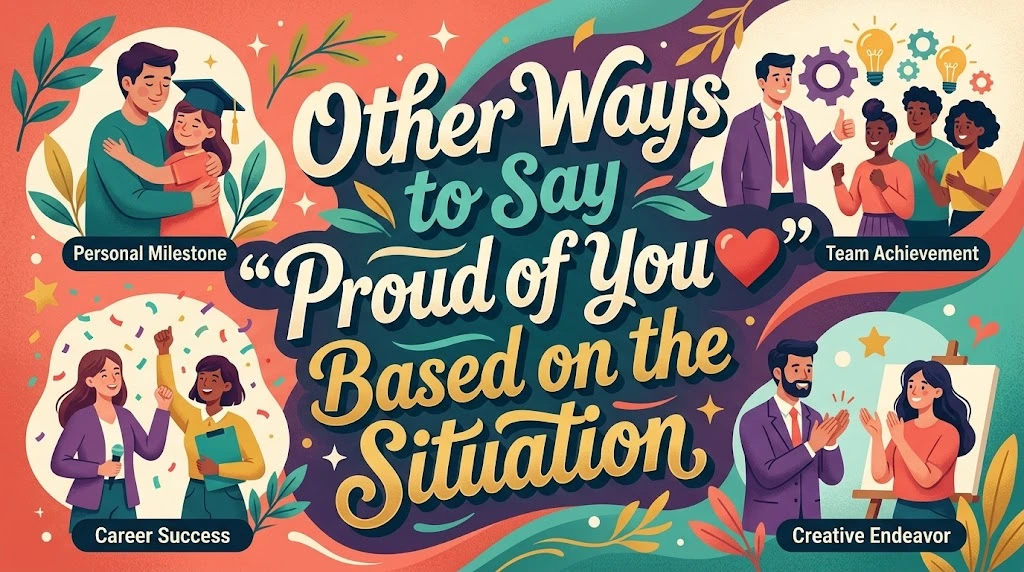
The relationship and situation can change the ideal wording.
For a Romantic Partner
Romantic messages can be more affectionate and emotionally open.
Good choices include:
- “I’m so proud of you, love.”
- “Watching you achieve this makes me so happy.”
- “You worked so hard for this, and I’m incredibly proud of you.”
- “I knew you could do it. I love seeing you succeed.”
- “You’ve come so far, and I couldn’t be happier for you.”
Example:
“You put so much into this. Watching you finally reach your goal makes me incredibly happy. I’m so proud of you ❤️.”
For a Friend
With friends, keep the message warm without making it unnecessarily sentimental.
Try:
- “You absolutely crushed it!”
- “I’m seriously proud of you.”
- “You did it!”
- “You worked so hard for this.”
- “Look at you! You’ve come so far.”
Example:
“You actually did it! After all those late nights, you finally got the job. I’m seriously proud of you.”
For a Family Member
Family messages can carry more emotional weight.
Try:
- “I’m so proud of the person you’ve become.”
- “You’ve worked incredibly hard for this.”
- “You should be so proud of yourself.”
- “Seeing you accomplish this means so much.”
- “You’ve come such a long way.”
Example:
“You’ve worked toward this for years. Seeing you finally reach this point makes me so proud.”
For a Coworker
At work, praise the specific action or achievement.
Try:
- “Excellent work.”
- “You handled that brilliantly.”
- “I’m really impressed with the result.”
- “You did an outstanding job.”
- “Your hard work paid off.”
Example:
“That was a challenging presentation, and you handled every question confidently. Excellent work.”
For a Student
When speaking to a student, recognition of effort can matter as much as the final result.
Try:
- “You’ve made incredible progress.”
- “Your hard work really shows.”
- “You should be proud of how far you’ve come.”
- “You didn’t give up, and it paid off.”
- “Keep going. You’re making real progress.”
This approach encourages growth rather than suggesting that praise only comes after perfect results.
“Proud of You” Alternatives by Tone
| Tone | Alternative | What it emphasizes |
| Affectionate | “I’m so proud of you.” | Personal admiration |
| Warm | “You should be proud of yourself.” | Self-recognition |
| Encouraging | “You’ve come so far.” | Progress |
| Casual | “You nailed it!” | Strong performance |
| Professional | “I’m impressed with your work.” | Achievement |
| Celebratory | “That’s a huge accomplishment.” | Milestone |
| Supportive | “You gave it your all.” | Effort |
| Reflective | “Look how far you’ve come.” | Growth |
| Motivational | “Keep going. You’re doing great.” | Continued effort |
| Emotional | “I couldn’t be happier for you.” | Shared happiness |
“Proud of You” vs. Similar Expressions
Several phrases look interchangeable but carry slightly different meanings.
“Proud of You” vs. “Happy for You”
“Proud of you” emphasizes admiration for someone’s actions, growth, or accomplishment.
“Happy for you” emphasizes your happiness about their good fortune or success.
For example:
“I’m proud of you for finishing the course.”
This focuses on effort and achievement.
“I’m happy for you now that you finally got the job.”
This focuses on the positive outcome.
You can use both together:
“I’m so happy for you, and I’m incredibly proud of everything you did to get here.”
“Proud of You” vs. “I’m Impressed”
“I’m impressed” generally focuses on performance.
“I’m proud of you” can feel more personal.
For example:
“I’m impressed with how quickly you learned the software.”
This sounds professional.
“I’m proud of you for pushing through when you wanted to quit.”
This sounds more personal and emotionally supportive.
“Proud of You” vs. “You Should Be Proud”
These expressions reverse the perspective.
“I’m proud of you” communicates the speaker’s feelings.
“You should be proud” encourages the recipient to recognize their own accomplishment.
Compare:
“I’m proud of you for finishing the marathon.”
with:
“You should be proud of yourself for finishing that marathon.”
Both are positive. The second puts the spotlight on the recipient’s own sense of accomplishment.
“Proud of You” vs. “Great Job”
“Great job” usually praises a particular action or result.
“Proud of you” can recognize the person and the journey behind the action.
For example:
“Great job on the presentation.”
is task-focused.
“I’m proud of you for stepping up and presenting despite being nervous.”
is more personal and specific.
Case Studies: Choosing the Right Alternative
A little context can make the difference clearer.
Case Study: A Friend Gets a Promotion
Suppose your friend has spent two years working toward a management position.
You could write:
“Congratulations!”
That’s perfectly acceptable, but it doesn’t acknowledge the journey.
A stronger message might be:
“You worked so hard for this. Your hard work paid off. I’m so proud of you!”
Here, the message recognizes both the outcome and the effort.
Case Study: A Coworker Gives a Great Presentation
Imagine a colleague delivers a difficult presentation to an important client.
Sending:
“Proud of you ❤️”
could feel too personal depending on the workplace.
Instead, try:
“You handled that presentation incredibly well. I’m really impressed.”
The compliment remains warm while keeping professional boundaries intact.
Case Study: Someone Doesn’t Get the Result They Wanted
Imagine your friend trains for a competition but doesn’t win.
A result-focused message such as “You nailed it” might not feel quite right.
Instead:
“The result wasn’t what you hoped for, but you gave it everything you had. You should be proud of yourself.”
That message recognizes something the scoreboard can’t measure: effort.
Case Study: Someone Has Made Personal Progress
Suppose a friend has spent months learning to speak confidently in public.
They finally give a presentation without freezing up.
Rather than focusing only on the presentation, say:
“Look how far you’ve come. You used to dread presentations, and now you’re up there leading the room. I’m so proud of you.”
This makes the compliment specific and memorable.
Read More : Headed vs. Heading: Meaning, Grammar, Differences, and Correct Usage
Common Mistakes to Avoid When Saying “Proud of You”
Even a positive phrase can miss the mark when the context isn’t right.
Using It When the Relationship Isn’t Close Enough
“Proud of you ❤️” can sound unusually intimate between people who barely know each other.
If you’re congratulating a casual acquaintance, try:
“Congratulations! That’s a fantastic accomplishment.”
Making Praise Sound Forced
Over-the-top praise can feel less sincere.
Instead of:
“You are literally the most incredible person on Earth and everything you do is amazing!”
try something specific:
“You worked on that project for months, and the final result really shows your effort.”
Specificity makes praise believable.
Focusing Only on Results
Someone can work incredibly hard without getting the outcome they wanted.
Instead of praising only the result, recognize effort and growth too.
“You didn’t get the result you wanted, but you handled the setback with real determination.”
That kind of message can mean more than a generic congratulations.
Using ❤️ When the Context Calls for Professional Distance
The heart emoji is expressive. That’s precisely why it needs context.
A professional message might be better without it:
“Excellent work on the presentation. Your preparation really showed.”
The goal isn’t to remove warmth. It’s to match warmth with the relationship.
Choosing a Generic Compliment When a Specific One Would Be Better
Compare:
“Good job!”
with:
“You explained a complicated idea so clearly that everyone could follow it.”
The second message tells the person exactly what they did well.
That specificity makes praise feel earned rather than automatic.
Quick Comparison: Best Alternatives to “Proud of You ❤️”
| Alternative | Tone | Best use | Example |
| I’m so proud of you | Warm | Personal achievements | “You worked so hard. I’m so proud of you.” |
| You did an amazing job | Positive | Completed tasks | “You did an amazing job on that presentation.” |
| I’m really impressed | Respectful | Strong performance | “I’m really impressed by how you handled that.” |
| You should be proud of yourself | Encouraging | Personal growth | “You should be proud of yourself for not giving up.” |
| Your hard work paid off | Supportive | Long-term effort | “All those late nights paid off.” |
| You nailed it | Casual | Friends and coworkers | “That presentation was fantastic. You nailed it!” |
| You’ve come so far | Heartfelt | Growth | “You’ve come so far since last year.” |
| That’s a huge accomplishment | Celebratory | Major milestones | “Finishing the marathon is a huge accomplishment.” |
| You earned this | Affirming | Awards and promotions | “You earned this recognition.” |
| I’m happy for you | Warm | Good news | “I’m genuinely happy for you.” |
How to Make “Proud of You” Feel More Meaningful
The most powerful praise often contains a specific reason.
Instead of:
“I’m proud of you.”
Try:
“I’m proud of you for continuing even when the project became frustrating.”
Instead of:
“You did great.”
Try:
“You stayed calm during the presentation and answered every question clearly.”
The difference is small but important.
Generic praise tells someone that you approve.
Specific praise tells them what you noticed.
That’s often what makes a compliment stick.
A useful formula is:
Recognition + specific reason + encouragement
For example:
“You worked on this for months, and it shows. You should be really proud of what you accomplished.”
Or:
“You didn’t give up when things got difficult. That determination is what makes me proud of you.”
This approach works in personal and professional communication alike.
FAQs About Other Ways to Say “Proud of You ❤️”
What are some sweet ways to say “proud of you”?
Sweet alternatives include “I’m so proud of you,” “You’ve come so far,” “You should be proud of yourself,” “I couldn’t be happier for you,” and “I’m so happy to see you succeed.”
For romantic relationships, you can make the message more personal:
“Watching you reach this goal makes me so happy. I’m incredibly proud of you ❤️.”
What is a professional way to say “proud of you”?
Professional alternatives include:
- “I’m impressed with your work.”
- “Excellent work.”
- “You handled that exceptionally well.”
- “Your hard work paid off.”
- “This is a significant accomplishment.”
- “You should be proud of the progress you’ve made.”
Specific praise usually sounds more professional than simply saying “proud of you.”
Can you say “proud of you” to a friend?
Yes. “Proud of you” is completely natural between close friends.
You can use it after a major achievement or during a difficult period.
For example:
“You kept going even when things got rough. I’m really proud of you.”
The phrase doesn’t have to be reserved for formal achievements.
Is “proud of you ❤️” romantic?
Not necessarily.
The ❤️ emoji usually adds affection, but “proud of you ❤️” isn’t automatically romantic. Parents, siblings, friends, mentors, and partners can all use the expression.
The relationship and surrounding message determine the tone.
What is the difference between “proud of you” and “happy for you”?
“Proud of you” focuses on admiration for someone’s effort, achievement, growth, or character.
“Happy for you” focuses on sharing someone’s happiness about a positive event.
For example:
“I’m proud of you for finishing your degree.”
focuses on the person’s accomplishment.
“I’m happy for you because you finally found a job you love.”
focuses more on the person’s happiness.
How do you say “proud of you” without sounding cliché?
Make your praise specific.
Instead of:
“I’m proud of you.”
try:
“You kept showing up even when you weren’t seeing results. That takes real determination.”
Specific observations make compliments feel more personal.
What can I say instead of “I’m proud of you” after someone succeeds?
You can say:
- “You did an amazing job.”
- “You absolutely nailed it.”
- “Your hard work paid off.”
- “You earned this.”
- “That’s a huge accomplishment.”
- “I’m really impressed.”
- “You’ve come so far.”
- “You should be proud of yourself.”
- “I couldn’t be happier for you.”
- “You gave it your all.”
Choose the one that matches what you actually want to praise.
Conclusion: Finding the Right Way to Say “Proud of You ❤️”
“Proud of you ❤️” is short, affectionate, and versatile. It can celebrate a graduation, acknowledge months of effort, encourage someone through a difficult period, or simply remind someone that their progress matters.
Still, the most meaningful alternative isn’t always the most elaborate one.
Sometimes “I’m so proud of you” is exactly right. Other times, “Your hard work paid off,” “You’ve come so far,” or “I’m really impressed” communicates your feelings more precisely.
The key is to match your words to the relationship, situation, achievement, and tone.
When you can, be specific. Don’t just tell someone that they did well. Tell them what you noticed.
“You worked hard for this, and you didn’t give up when things got difficult. You should be proud of yourself.”
That’s more than a compliment. It reminds someone that their effort mattered.
And sometimes, that’s exactly what they need to hear.