Have you ever received a message ending with “XD” and wondered what the person was trying to say? Maybe a friend sent you a funny meme, replied to your joke with “XD,” or used it during a conversation on Snapchat. If you’ve seen this expression online, you’re not alone.
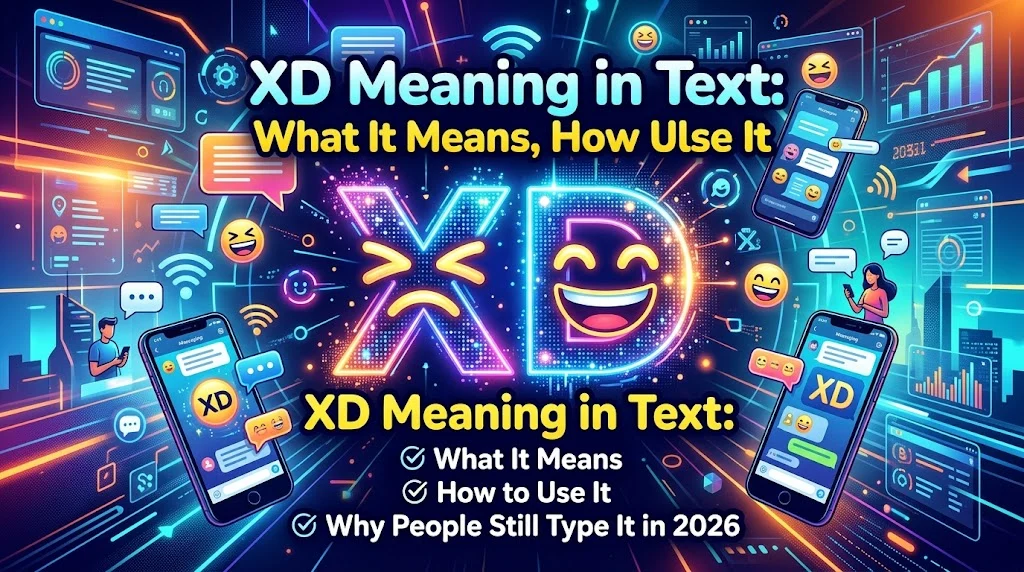
XD meaning in text is usually a laughing face that expresses amusement, laughter, or a playful reaction. It’s a classic internet emoticon that people use to show they find something funny. Although it looks like two ordinary letters, turning your head sideways reveals its meaning: X represents tightly closed eyes, while D resembles a wide-open mouth.
For example, someone might text, “I can’t believe you actually did that XD.” The expression adds a playful tone and suggests that the sender finds the situation amusing.
But there’s more to XD than a simple laugh. Depending on the conversation, it can express friendly teasing, exaggerated amusement, or a lighthearted reaction. Its meaning can also depend on the people chatting and the situation they’re discussing.
In this guide, you’ll learn what XD means in text messages, how people use it on WhatsApp, Instagram, TikTok, and Snapchat, how it differs from LOL and 😂, and how to respond when someone sends it to you.
What Does XD Mean in Text and Chat?
XD means laughter, amusement, or a playful reaction in most texting and online conversations. It’s a text-based emoticon that represents a face laughing with its eyes squeezed shut and its mouth open.
Think of XD as a written facial expression. When you laugh in person, your face communicates part of your reaction. In text messages, however, the other person can’t see your expression. Emoticons such as XD help fill that gap.
People commonly use XD when they:
- Find a joke or meme funny.
- Want to show that they’re laughing.
- Tease a friend in a friendly way.
- React to an embarrassing but amusing situation.
- Make a message sound less serious.
- Add personality to an otherwise plain text message.
For example:
Person A: “I waved at someone who wasn’t waving at me.”
Person B: “That’s so awkward XD.”
Here, XD shows that Person B finds the situation funny. It also keeps the response lighthearted rather than making the other person feel embarrassed.
However, XD doesn’t always mean the sender is literally laughing out loud. Sometimes, people use it out of habit or simply to make a message feel playful.
Quick Definition of XD Meaning in Text
Here’s the meaning at a glance.
| Feature | Explanation |
| Main meaning | Laughing, amusement, or a funny reaction |
| Type | Text emoticon |
| X | Represents tightly closed eyes |
| D | Represents an open mouth |
| Common use | Texting, gaming chats, memes, and social media |
| Tone | Usually playful, cheerful, or humorous |
| Capitalization | XD and xd are both common |
| Formality | Primarily informal |
Example: “That joke was hilarious XD.”
In this sentence, XD adds a visual expression of laughter. Without it, the message still makes sense, but it may feel less expressive.
What Does the XD Face Look Like?
To understand XD, imagine a laughing face turned sideways.
- X represents the eyes: The crossed shape suggests that the person’s eyes are tightly shut from laughing.
- D represents the mouth: The curved shape resembles a wide-open mouth.
- Together, XD represents laughter: The expression looks like someone laughing so hard that their eyes squeeze shut.
You can recognize the same basic idea in other text emoticons. For instance, 🙂 represents a smile, while 🙁 represents a frown. XD takes that concept further by showing a more exaggerated reaction.
Unlike a modern emoji, XD doesn’t require a special character or an emoji keyboard. You can type it using two ordinary letters on almost any device.
What Does XD Stand For? Full Form and Short Meaning
One common question is whether XD has a full form. Does each letter represent a word, or does the expression stand for a longer phrase?
In ordinary texting, XD doesn’t have a standard full form. It’s an emoticon rather than an acronym. The letters work together visually to represent a laughing face.
An acronym uses letters to stand for words, such as ASAP for “as soon as possible.” XD works differently. Its meaning comes from how the characters resemble facial features when viewed sideways.
The short meaning of XD includes:
- Laughing: Something is funny.
- Amusement: The sender enjoys what they’re reading or watching.
- Playfulness: The message is intended to feel lighthearted.
- Friendly teasing: The sender is joking with someone.
- Exaggerated reaction: The sender wants to make their amusement more expressive.
Consider this example:
“Your dog looks like he pays the bills XD.”
The sender probably isn’t making a serious financial observation. Instead, XD reinforces the joke and signals that the message is playful.
It’s worth remembering that the letters XD can have unrelated meanings in other settings. A product name, company, or technical discussion may use the same letters differently. In a casual conversation, though, the laughing-face interpretation is usually the most relevant.
Origin and History of XD in Online Communication
XD belongs to the broader history of text-based emoticons, which developed as people looked for ways to express emotion through written messages.
Early computer communication often lacked the expressive features available in today’s messaging apps. Plain text couldn’t easily show a smile, a raised eyebrow, or a laugh. People began combining punctuation marks and letters to create simple representations of facial expressions.
The familiar sideways smile 🙂 and frown 🙁 became recognizable examples of this approach. Other expressions developed as internet users experimented with different combinations of characters.
XD fits naturally into that tradition. Instead of using punctuation to create a face, it uses two letters to represent exaggerated laughter.
How XD Became Common Online
Several types of online communities helped text emoticons spread:
- Instant messaging: Friends used short expressions to communicate quickly during live chats.
- Internet forums: Members added emoticons to posts to make jokes and reactions easier to understand.
- Online gaming: Players used compact expressions to react to funny moments without interrupting gameplay.
- Social networking: People carried familiar texting habits into comments, private messages, and online discussions.
Over time, XD became recognizable to many internet users as a laughing expression.
However, the exact first use of XD is difficult to establish confidently. The broader history of emoticons is documented more clearly than the origin of every individual expression. It’s better to describe XD as part of the evolution of internet communication than to assign it an unverified inventor or exact creation date.
Why People Still Use XD
The arrival of graphical emojis didn’t make text emoticons disappear. People continue to use XD because it’s quick, familiar, and easy to type.
It can also carry a sense of nostalgia. For some internet users, XD recalls older chat rooms, gaming conversations, and early social networking. Others simply like its exaggerated appearance.
In other words, XD has survived because people don’t always choose the newest expression. They choose the one that fits their personality and the conversation.
How People Use XD in Everyday Conversations
The meaning of XD becomes clearer when you see it in context. Although laughter is its central meaning, people use it in several slightly different ways.
Using XD to Show Laughter
The most straightforward use of XD is to react to something funny.
For example:
Alex: “I tried to bake cookies, but they came out looking like rocks.”
Jordan: “At least they’ll last forever XD.”
Jordan uses XD to emphasize the joke. The expression suggests that the comment is meant to be funny rather than insulting.
You can use XD in a similar way when responding to a joke, a funny story, a meme, or an unexpected situation.
Using XD for Playful Teasing
Friends often tease each other through text messages. However, written teasing can sometimes sound harsher than intended because the reader can’t hear the speaker’s voice.
Adding XD can help signal a playful tone.
For example:
Mia: “I spent twenty minutes looking for my phone.”
Sam: “While holding it in your hand? XD”
The expression helps communicate that Sam is joking about the situation.
Still, XD doesn’t automatically make every comment harmless. If the message is cruel or touches on something sensitive, the recipient may interpret it differently.
Using XD to React to Memes and Jokes
Memes often rely on shared experiences, unexpected twists, or absurd humor. XD provides a quick way to show appreciation without writing a full response.
Examples include:
- “This meme describes my entire week XD.”
- “Why is this so accurate XD?”
- “The ending caught me off guard XD.”
- “I wasn’t expecting that plot twist XD.”
In these examples, XD acts like a written laugh or a quick reaction. It lets the sender communicate amusement with very little effort.
Using XD to Express Playful Excitement
Although XD most commonly expresses laughter, it can also accompany a cheerful or excited message.
For example:
“WE FINALLY WON THE MATCH XD!”
Here, the expression adds energy to the message. The sender may be laughing, celebrating, or expressing exaggerated excitement.
The important distinction is that XD doesn’t have a completely separate, fixed meaning in this situation. The central idea remains an expressive, playful reaction.
Using XD at the End of a Message
Many people place XD at the end of a sentence because it functions like a facial expression accompanying spoken words.
Compare these messages:
- “You forgot again.”
- “You forgot again XD.”
The first message could sound annoyed or matter-of-fact. The second is more likely to suggest playful teasing, depending on the context.
However, XD isn’t a guaranteed tone softener. If someone is already upset, the expression might come across as dismissive. Always consider the full conversation rather than relying on one symbol to determine someone’s intention.
XD Meaning on WhatsApp, Instagram, TikTok, and Snapchat
Does XD change its meaning depending on the social media platform? Usually, no. Its basic meaning remains consistent, although the content and style of each platform influence how people use it.
What Does XD Mean on WhatsApp?
On WhatsApp, XD usually expresses laughter or amusement in private conversations and group chats.
Someone might send it after hearing a funny story, seeing a ridiculous photo, or reading a playful message.
Example:
You: “I accidentally sent my grocery list to the class group.”
Friend: “Please tell me someone replied with a shopping cart XD.”
Your friend uses XD to react humorously to the situation.
On WhatsApp, the expression can also appear as a standalone response. If someone shares a funny video, replying with just “XD” may be enough to communicate that you found it amusing.
What Does XD Mean on Instagram?
On Instagram, XD commonly appears in direct messages, comments, and conversations about funny posts or Reels.
For example:
“Why does this Reel describe us so perfectly XD?”
Here, the sender is using XD to show amusement at relatable content.
It may also appear in comments when users react to a friend’s joke or an unexpected moment. However, XD doesn’t have a separate, universally accepted Instagram-specific definition.
Its meaning still depends on the surrounding content.
What Does XD Mean on TikTok?
On TikTok, people may use XD in comments, private messages, or conversations about funny videos and trends.
For example:
“This is exactly what happens when my brother tries to cook XD.”
The expression emphasizes the humor in the video or situation.
TikTok users also have access to many graphical emojis and reaction features. Some prefer those options, while others continue to type text emoticons such as XD. Neither choice changes the expression’s basic meaning.
What Does XD Mean on Snapchat?
On Snapchat, XD can appear in private chats, conversations with friends, or messages reacting to snaps.
For example:
Friend: “I sent you a picture before I realized my hair looked like that.”
You: “I’m saving this memory forever XD.”
The response uses XD to communicate playful amusement.
If someone sends you XD after a snap, they’re generally reacting to something funny or amusing. The surrounding messages and your relationship with the person can help you understand whether they’re laughing with you or teasing you.
Does XD Have a Different Meaning on Each Platform?
No standard platform-specific meaning replaces XD’s usual interpretation as a laughing emoticon.
| Platform | Common use | Example |
| Reacting to jokes in chats | “That was hilarious XD” | |
| Responding to funny posts or Reels | “This is literally us XD” | |
| TikTok | Commenting on humorous videos | “The ending got me XD” |
| Snapchat | Reacting to snaps and playful messages | “You actually did that XD” |
| Gaming chats | Reacting to funny gameplay moments | “I walked straight into a wall XD” |
These examples illustrate common conversational uses rather than official platform definitions.
The key takeaway: Interpret XD through the message around it. The platform may influence the conversation, but the emoticon itself usually retains the same meaning.
Other Meanings of XD Outside Texting
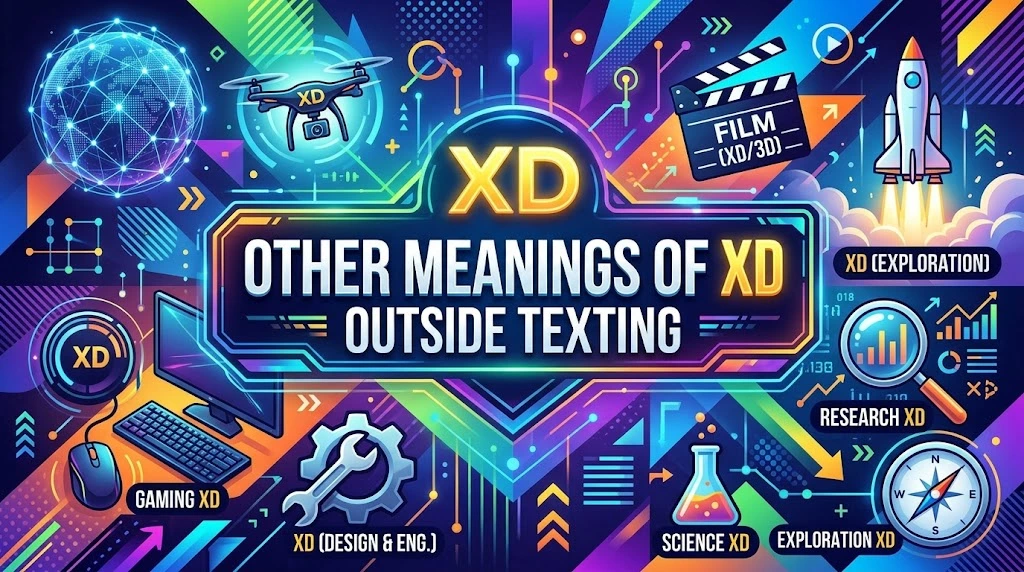
Although XD usually represents laughter in casual chats, the same letters can mean something entirely different elsewhere.
This distinction matters because not every appearance of XD is an emoticon.
XD as a Product or Brand Name
One recognizable example is Disney XD, a television brand associated with entertainment programming for younger audiences.
In this context, XD is part of a brand name. It doesn’t mean that someone is laughing.
The same principle applies to other product names, business names, and titles that use the letters XD. Their meaning depends on the organization or subject being discussed.
XD in Gaming and Online Communities
Gaming communities commonly use XD as a laughing reaction.
A player might type it after making a silly mistake, watching an unexpected event, or seeing another player do something amusing.
For example:
“Three of us fell off the same bridge XD.”
Here, XD communicates amusement about a shared gaming moment.
The expression also fits fast-paced chats because it requires only two keystrokes. Players can react quickly without writing a full sentence.
XD in Technical and Professional Contexts
In technical discussions, XD may refer to a product, project, tool, or specialized term. Its meaning depends on the specific field.
For example, Adobe XD is the name of a design application associated with user experience and interface design. In a conversation about design software, the letters refer to the product rather than a laughing face.
Compare these two messages:
- “That bug was hilarious XD.” — XD expresses laughter.
- “We created the prototype in Adobe XD.” — XD identifies a design application.
The surrounding words make the difference clear. If you’re unsure, read the entire sentence before deciding what the letters mean.
Common Misunderstandings About XD Meaning in Text
Because XD is short and informal, people sometimes misinterpret it. Understanding a few common mistakes can help you read messages more accurately.
Is XD an Acronym?
No, XD is generally an emoticon rather than an acronym in texting.
An acronym or initialism represents words or a longer phrase. XD, in its familiar texting use, represents a face.
The distinction is simple:
- LOL: An abbreviation of “laughing out loud.”
- XD: A text-based representation of a laughing face.
Both can express amusement, but they do so in different ways.
Does XD Always Mean Someone Is Laughing?
Not necessarily.
Someone might use XD to show that they found a message amusing, even if they aren’t physically laughing. Others use it automatically as part of their usual texting style.
For example:
“Nice job, you managed to break it already XD.”
The sender may be genuinely amused, lightly teasing someone, or simply keeping the conversation playful.
The expression suggests a tone, but it doesn’t reveal the sender’s exact emotional state.
Is XD Sarcastic or Rude?
XD is usually playful, but it can appear in sarcastic messages.
Consider these examples:
Friendly: “You wore mismatched socks again XD.”
Potentially sarcastic: “Wow, what a brilliant idea XD.”
The first message may be friendly teasing. The second could express genuine amusement or sarcastic criticism, depending on the situation.
Look for clues such as the previous messages, the relationship between the people, and the subject being discussed.
If a person repeatedly makes hurtful comments, adding XD doesn’t automatically turn those comments into harmless jokes.
Does XD Have a Meaning When Read Normally?
When people use XD as an emoticon, they generally intend you to recognize the sideways face rather than pronounce the letters as a word.
However, the same letters can appear in names, technical terms, and other contexts. In those situations, the emoticon interpretation may not apply.
For example, “I laughed so hard XD” uses the conventional emoticon. “Open the Adobe XD file” refers to design software.
Context is the best guide.
XD vs. LOL, LMAO, 😂, and Other Similar Expressions
XD isn’t the only way to express laughter online. People also use abbreviations, emojis, and other text-based reactions.
Although these expressions overlap, each can carry a slightly different tone.
| Expression | Meaning | Typical tone |
| XD | Laughing or amused face | Playful and expressive |
| LOL | Laughing out loud; often a general reaction | Casual and versatile |
| LMAO | Laughing my ass off | Strong or emphatic amusement |
| 😂 | Face with Tears of Joy emoji | Expressive and humorous |
| 😆 | Grinning Squinting Face emoji | Cheerful and energetic |
| hehe | Light laughter or a giggle | Soft and playful |
| ROFL | Rolling on the floor laughing | Exaggerated amusement |
These descriptions reflect common usage. People don’t always follow strict rules when choosing an expression.
XD vs. LOL
The main difference is how the expressions communicate laughter.
XD represents a laughing face, while LOL abbreviates “laughing out loud.” Both can react to a joke, but XD often feels more visual or exaggerated.
Examples:
- “That was the funniest thing I’ve seen today XD.”
- “That was the funniest thing I’ve seen today LOL.”
Both messages communicate amusement. Which one sounds more natural depends on the sender’s texting habits.
XD vs. 😂
The 😂 emoji is officially known as Face with Tears of Joy. It uses a graphical image to communicate laughter.
XD achieves a similar effect using ordinary text characters.
For example:
- “I can’t stop laughing XD.”
- “I can’t stop laughing 😂.”
The first uses a classic text emoticon. The second uses a colorful emoji. Both are common ways to react to something funny.
XD vs. LMAO
LMAO stands for “laughing my ass off.” It’s often used to express strong amusement or an emphatic reaction.
XD is generally more visual and can feel playful or nostalgic.
Compare:
- “You actually believed that? XD”
- “You actually believed that? LMAO”
Both can be teasing, but LMAO may communicate a stronger reaction. Neither expression automatically reveals whether the sender is being friendly or sarcastic.
XD vs. Hehe
“Hehe” represents a written giggle. It can sound softer, more mischievous, or more understated than XD.
For example:
“I may have eaten the last cookie hehe.”
The word adds a playful sense of mischief. By contrast, XD often communicates a more exaggerated laughing expression.
The best choice depends on the mood you want to convey.
Examples of XD in Realistic Text Conversations
The easiest way to understand XD is to see how it works in different situations. The following fictional conversations demonstrate common uses.
XD Between Friends
Alex: “I walked into the wrong classroom again.”
Jordan: “How does that keep happening XD”
Meaning: Jordan finds Alex’s mistake funny and is teasing them in a friendly way.
XD in a Funny Conversation
Mia: “My cat knocked everything off my desk.”
Jay: “Your cat owns that place XD.”
Meaning: Jay is joking about the cat’s behavior. XD reinforces the playful tone.
XD in Gaming Chats
Player 1: “I tried to jump over the wall and fell into the water.”
Player 2: “That was some professional gameplay XD.”
Meaning: Player 2 is making a joke about the mistake. The expression suggests that the comment isn’t meant as serious praise.
XD in a Sarcastic Message
Alex: “You said you’d be ready ten minutes ago.”
Sam: “I’m basically on time XD.”
Meaning: Sam may be joking about being late. Depending on their relationship, the message could also sound sarcastic.
XD in a Group Chat
Taylor: “Everyone agreed to meet at 7, and somehow we’re all late.”
Morgan: “At least we’re consistent XD.”
Meaning: Morgan is pointing out the group’s shared habit in a humorous way.
XD After an Embarrassing Moment
Jamie: “I said ‘you too’ when the waiter told me to enjoy my meal.”
Riley: “A timeless classic XD.”
Meaning: Riley recognizes the awkward situation and responds with friendly humor.
These examples show that XD usually adds a laughing or playful tone. The exact interpretation still depends on the surrounding conversation.
How to Reply When Someone Sends XD
When someone sends you XD, you don’t need a special response. The best reply depends on what they were reacting to and whether you want to continue the conversation.
Casual Replies to XD
If a friend uses XD after a joke, you can keep the conversation going with a simple response.
Examples:
- “LOL, right?”
- “I know XD.”
- “That was hilarious.”
- “I couldn’t help it.”
- “You get it!”
These replies work well when both people understand the joke.
Funny Replies to XD
If you want to match the playful energy, try responding with another joke.
Examples:
- “Glad someone appreciates my comedy.”
- “Don’t encourage me 😂.”
- “Just wait until you hear the next one.”
- “I’m available for birthday parties.”
- “My work here is done XD.”
Choose a response that fits your relationship. A joke between close friends may not work as well with someone you barely know.
Friendly Replies to XD
Sometimes, a simple acknowledgment is enough.
You could say:
- “You always crack me up.”
- “I’m glad you found that funny.”
- “We really do laugh at everything.”
- “That’s why we get along.”
- “Haha, exactly!”
These responses keep the conversation warm without forcing another joke.
What If You Don’t Understand Why They Sent XD?
There’s no need to guess. Ask a friendly question if the meaning isn’t clear.
For example:
Friend: “XD”
You: “Wait, what did I miss?”
Or, if the person responded to something you said:
“I’m not sure whether you’re laughing with me or at me XD.”
A light question can clear up confusion without making the conversation awkward.
Should You Reply With XD Too?
You can, but you don’t have to.
If XD fits your usual texting style, mirroring it can make the exchange feel natural. If you prefer emojis or ordinary words, those work just as well.
For example, you could respond with “😂,” “LOL,” or “That’s so funny.” There’s no rule that says you must use the same expression as the other person.
Read More : WYO Meaning in Text: What It Really Means in Chats and Social Media
Is XD Still Popular in 2026?
XD remains a recognizable expression in online communication, particularly among people familiar with text emoticons and internet gaming culture. However, recognition doesn’t necessarily mean that everyone uses it regularly.
Modern messaging platforms offer a wide range of graphical emojis, GIFs, stickers, and reaction features. These options compete with older text-based expressions, but they haven’t made every emoticon obsolete.
XD continues to serve a simple purpose: it adds a visible expression of amusement to a text message.
Who Uses XD Today?
XD isn’t limited to one age group or type of internet user.
You may encounter it among:
- Gamers chatting during or after matches.
- Friends who use text emoticons regularly.
- Members of online forums and communities.
- People who enjoy retro internet expressions.
- Social media users reacting to jokes and memes.
Some people use XD because they grew up seeing it online. Others adopt it because it’s easy to type or fits their sense of humor.
It’s more accurate to connect its use to personal style and online communities than to claim that only a specific generation uses it.
Is XD Outdated in 2026?
Whether XD feels outdated depends on the person and the setting.
For some users, it has a nostalgic quality associated with older internet conversations. Others still use it naturally because they prefer its expressive, playful look.
Consider the difference between these reactions:
- “That was funny 😂”
- “That was funny XD”
- “That was funny lol”
All three can work in a casual chat. The choice depends on personal preference, familiarity, and the tone of the conversation.
XD may feel less common in some circles than newer emoji reactions, but that doesn’t make it meaningless or universally outdated.
Where Is XD Commonly Seen?
You’ll most often encounter XD in informal digital communication, including gaming chats, group messages, online forums, and social media conversations.
It tends to fit situations where people can be casual and expressive. In a formal email or serious work discussion, it may seem out of place.
There isn’t a reliable universal usage figure that establishes exactly how often people type XD in 2026. Without a defined dataset or a consistent measurement method, claims about its precise popularity or growth would be misleading.
The practical lesson is simple: XD remains understandable in many online settings, but its appropriateness depends on your audience.
Quick Facts About XD Meaning in Text
Here’s a quick recap of the most important facts about XD.
- Primary meaning: A laughing or amused face.
- Category: Text emoticon.
- Visual structure: X resembles closed eyes, while D resembles an open mouth.
- Main purpose: Communicating laughter, amusement, or playfulness.
- Common placement: At the end of a message or as a standalone reaction.
- Capitalization: Both XD and xd appear in casual communication.
- Typical tone: Playful, humorous, or expressive.
- Platform use: Commonly understood in informal chats and online communities.
- Professional suitability: Usually better reserved for informal communication.
- Alternative expressions: LOL, LMAO, 😂, 😆, and hehe.
- Full form: No standard full form in its ordinary emoticon use.
- Meaning in other contexts: The letters can refer to brands, products, or technical terms.
The most important point is that XD usually expresses laughter, but the surrounding message determines its exact tone.
Frequently Asked Questions About XD Meaning in Text
What Does XD Mean in Texting?
XD usually represents a laughing face. People use it to show amusement, react to jokes, or make a message sound playful. The X resembles closed eyes, while the D resembles an open mouth.
What Does XD Mean on Snapchat?
On Snapchat, XD generally means laughter or amusement. Someone might use it in a private chat after seeing a funny snap or reading a playful message. Its basic meaning doesn’t change just because it appears on Snapchat.
What Does XD Mean on Instagram?
On Instagram, XD commonly appears in direct messages and comments about funny posts, Reels, and jokes. It usually communicates laughter or a playful reaction rather than a separate Instagram-specific meaning.
What Does XD Mean on WhatsApp?
On WhatsApp, XD usually signals that someone finds something funny. It can appear in private chats, group conversations, and replies to memes or humorous stories.
Is XD an Acronym or an Emoticon?
XD is generally an emoticon in texting. It represents a laughing face rather than serving as the initials of a standard phrase. In other contexts, the letters may have unrelated meanings.
Does XD Mean Laughing Out Loud?
Not exactly. XD represents a laughing facial expression, while LOL stands for “laughing out loud.” Both can communicate amusement, but they use different forms of expression.
What Does XD Mean When a Girl Sends It?
When a girl sends XD, she usually means that she finds something funny, amusing, or playful. The expression alone doesn’t prove that she’s flirting, interested romantically, or expressing any particular emotion beyond the context of the message.
What Does XD Mean When a Guy Sends It?
When a guy sends XD, it generally conveys laughter, amusement, or friendly teasing. It doesn’t automatically indicate flirting or romantic interest. Look at the conversation as a whole to understand his intention.
Is XD Rude or Sarcastic?
XD isn’t inherently rude or sarcastic. People most often use it playfully, but it can accompany sarcasm or teasing. The surrounding words, relationship, and conversation help determine the intended tone.
Is XD the Same as LOL?
No. XD is a text emoticon that represents a laughing face, while LOL is an abbreviation for “laughing out loud.” Both are common reactions to humor, and people sometimes use them interchangeably.
Is XD Outdated in 2026?
XD may feel nostalgic to some users, but it remains recognizable in many informal online communities. Whether it feels current or outdated depends on personal preference, audience, and texting habits.
Can You Use XD in Professional Messages?
It’s generally better to avoid XD in formal emails, official communications, and serious workplace discussions. In a casual conversation with a colleague you know well, it may be acceptable if your workplace culture supports informal messaging.
Conclusion: Understanding XD in Text Messages
The meaning of XD in text is straightforward once you recognize the face behind the letters. XD is a text emoticon that usually expresses laughter, amusement, or a playful reaction. The X represents closed eyes, while the D resembles an open mouth.
You’ll commonly see it in conversations on WhatsApp, Instagram, TikTok, Snapchat, gaming chats, and other online communities. Although its popularity varies among users, its core meaning generally stays the same across platforms.
Remember that XD doesn’t always mean someone is literally laughing. It can also soften a playful comment, accompany friendly teasing, or add personality to a message. In some situations, the same expression may even appear sarcastic.
When someone sends you XD, consider the conversation before deciding what they mean. You can respond with a joke, another emoticon, an emoji, or a simple acknowledgment.
Ultimately, XD is a small expression with a simple purpose: it helps people communicate humor and emotion through text when facial expressions aren’t visible.